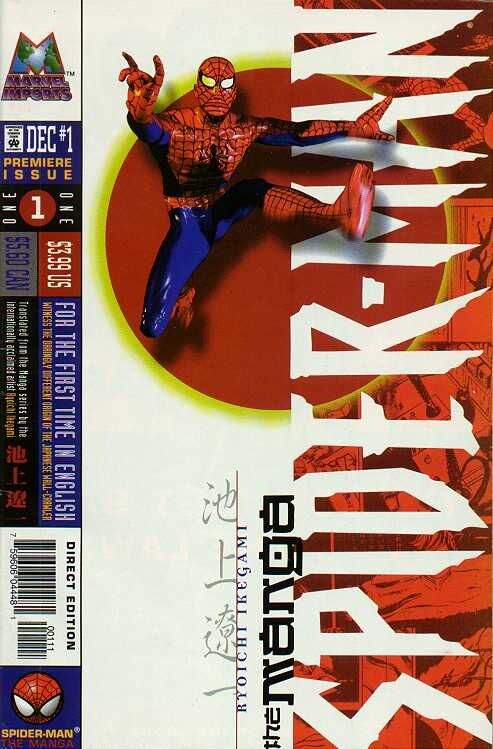
As I have discussed in previous articles, Marvel has a long history of dipping their toes in the manga waters. As I’ve been on a bit of a manga kick, I thought I’d give Spider-Man: The Manga – one of Marvel’s earliest manga endeavors – a look. This one was a bit trickier to find however, as the series’ English translation has never been reprinted and copies of the Japanese collections are pretty rare these days. Fortunately, I managed to track down the majority of the series at a decent price, albeit with a few issues – including the final ones – missing. It’s kind of a moot point though as the English translation was cancelled before it reached its conclusion.

This series was the first of many collaborations Marvel had with Kodansha and was one of Marvel’s first attempts at selling their properties abroad. But much like the famous Toei Spider-Man TV series where Spider-Man fought rubber suited monsters and had a giant robot, Spider-Man: The Manga veers far off from its source material in an attempt to appeal to what was popular with Japanese readers. It was written and illustrated by Crying Freeman artist Ryoichi Ikegami who was mostly given free rein to do as he pleased, which not only allowed him the opportunity to reinterpret an iconic comic character, but also the chance to experiment and develop his art style significantly.
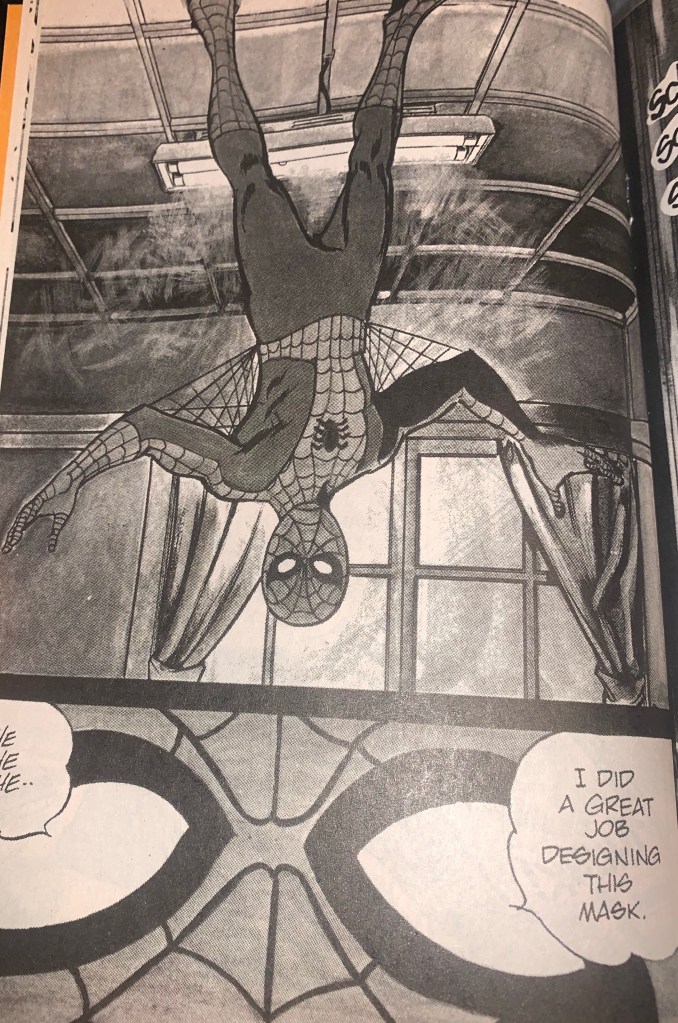
The first few chapters are somewhat close to the original Spider-Man story, with a young teenager named Yu Komori who lives with his Aunt Mei getting bit by a radioactive Spider and subsequently learning the lesson of responsibility when his power leads to someone dying due to an error on this part. There’s plenty of the teenage angst and struggles for money that were heavily featured in the Lee/Ditko era and even a version of J Jonah Jameson. Yu is in some ways very close to the Peter Parker who appeared in the early issues of Amazing Spider-Man which covered his high school days. He is frequently fretting about his aunt, their monetary problems and how he is perceived and treated by his fellow students. Not to mention he is secretly crushing on his childhood friend Rumi who is unfortunately the brother of the manga version of Electro and subsequently develops a hatred of Spider-Man following her brother’s death.
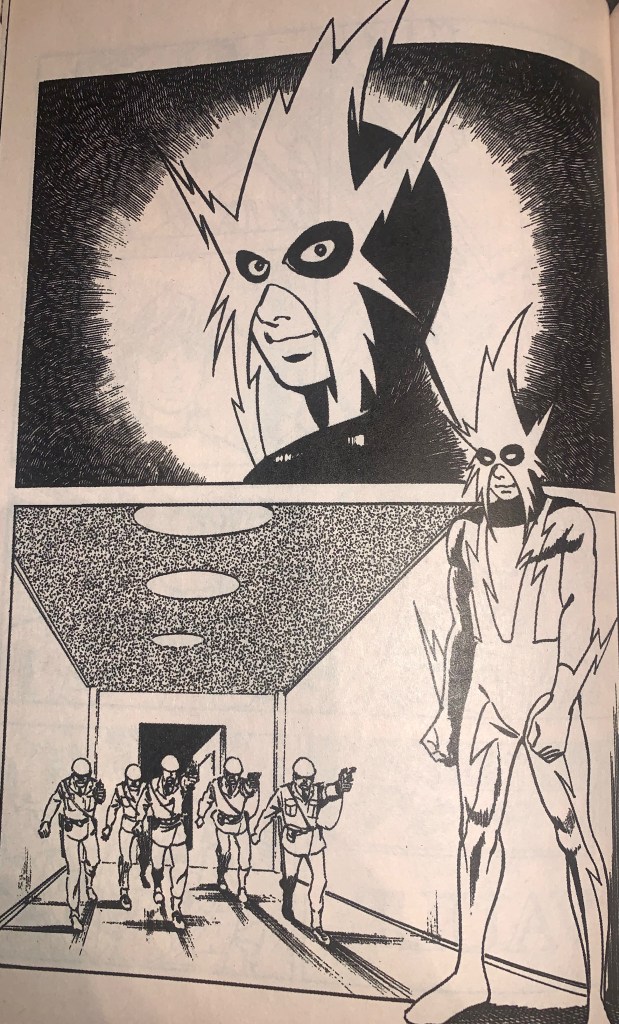
The classic villains are also there with the aforementioned Electro being the first introduced, though this time, he is part machine as opposed to having electrical powers. The Lizard is followed who is a former scientist who was a victim of a murder attempt by the owner of the company he walked for (who also happens to be the father of Yu’s best friend) that lead to him being stranded in the jungle where he adapts in a rather Darwinian way. A slightly leftfield villain choice follows with perennial D-lister The Kangaroo who in the manga is a American profession wrestler who is completely out of control and regularly terrorises innocent civilians. Later, there is also a version of Mysterio whom like his US counterpart attempts to frame Spider-Man in their first encounter.
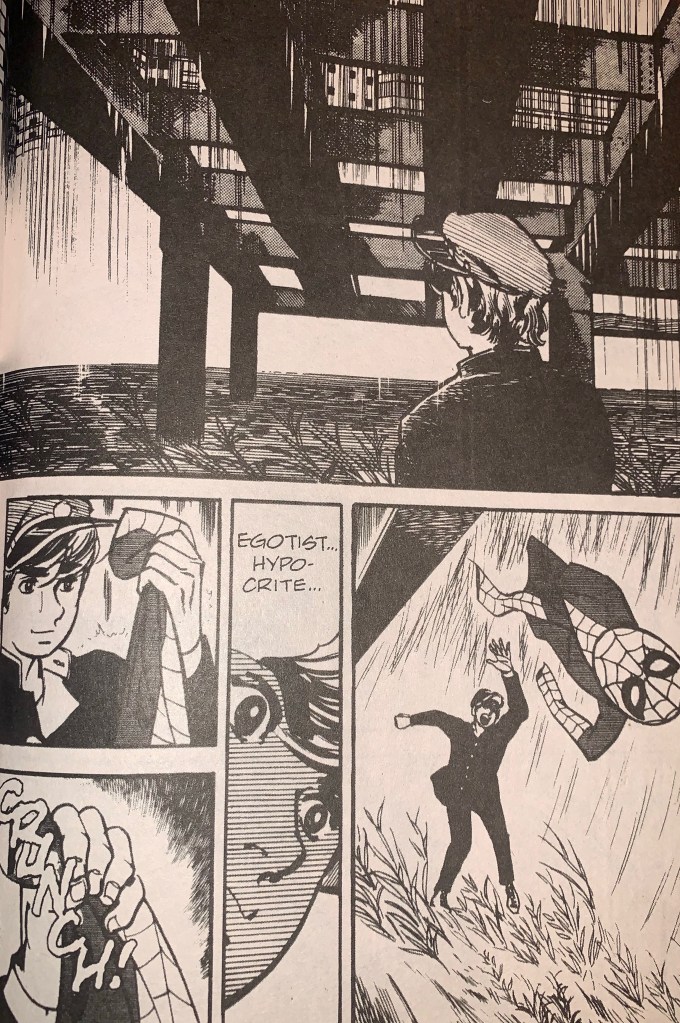
But as the series progresses, it starts to get significantly more angsty and dark. Peter Parker was often known to partake in bouts of brooding and lamenting his problems, but Yu takes it to a whole other level. He is constantly lamenting his situation and the drawbacks of having superpowers. This culminates in his decision to quit being Spider-Man following his encounter with The Kangaroo, and the series goes in a very different direction. At it’s core, Spider-Man is a series about responsibility – a boy with superpowers trying to do the right thing whilst playing havoc with his regular life. With Ikegami’s interpretation, we have a boy who has superpowers and is constantly wishing he didn’t have them. Whilst his life is anything but straightforward, you do get the impression that Peter Parker sometimes enjoys being Spider-Man. For Yu however, it is a constant curse that haunts both his thoughts and dreams. In his time he spends away from Spider-Man, the bullies and obstacles he encounters always lead him to question if he should use his powers for his own benefit. A prime example being in issue 12 when he is trying to track down Rumi during Mysterio’s time posing as Spider-Man and ends up being assaulted by a yakuza he accidentally knocks into whilst running after her. He contemplates using his powers to defend himself, but believes he would be no better than the fake Spider-Man that is tarnishing his name. This results in him being beaten black and blue (with insult to injury being added later when the fake Spider-Man mugs Rumi on the way home right in front of him).
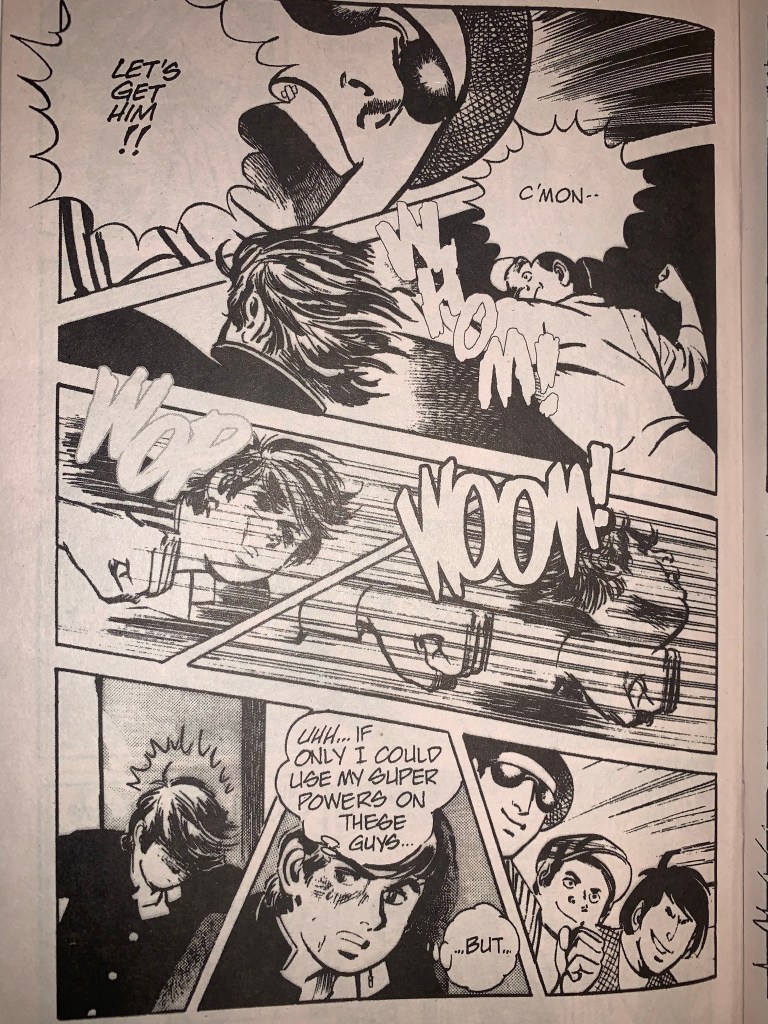
It’s an unusual mix and at times, it appears the series is having a hard time deciding what it wants its identity to be. This isn’t helped by not only having issues missing in my collection, but also the fact that some chapters were skipped (mostly for content reasons which including a look into puberty which went a bit further than Marvel in the 90s was willing to show in a comic with their flagship character). As the series changes tone, the super villains mostly disappear and we’re left with yakuza, sleazy criminals and members of a kendo club that Yu both upstages and gets on the wrong side of. This changes the core theme of the story significantly with it shifting from a boy struggling to maintain his normal life whilst fighting crime as a super hero to a boy who is terrified of the damage his powers will do to others and will only turn to them as a last resort.
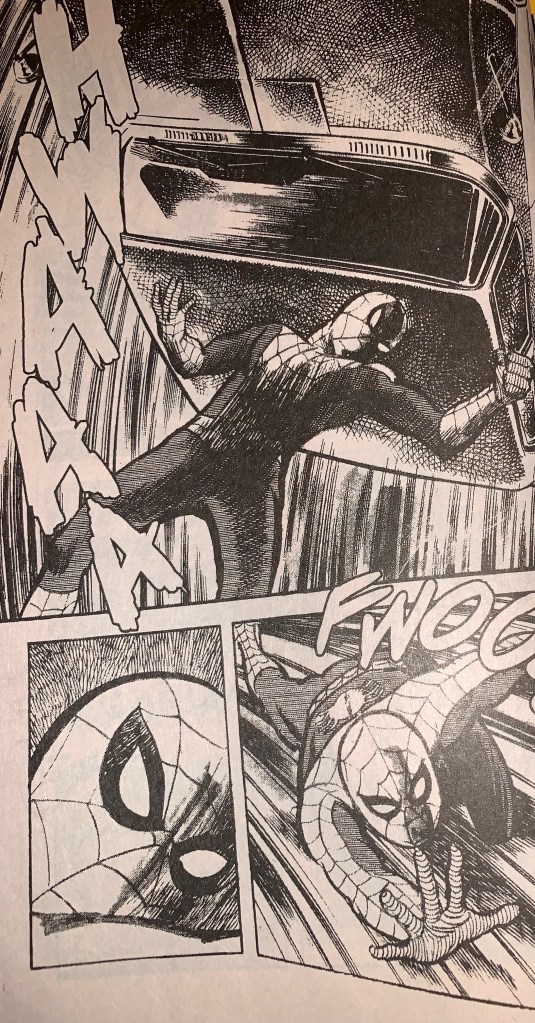
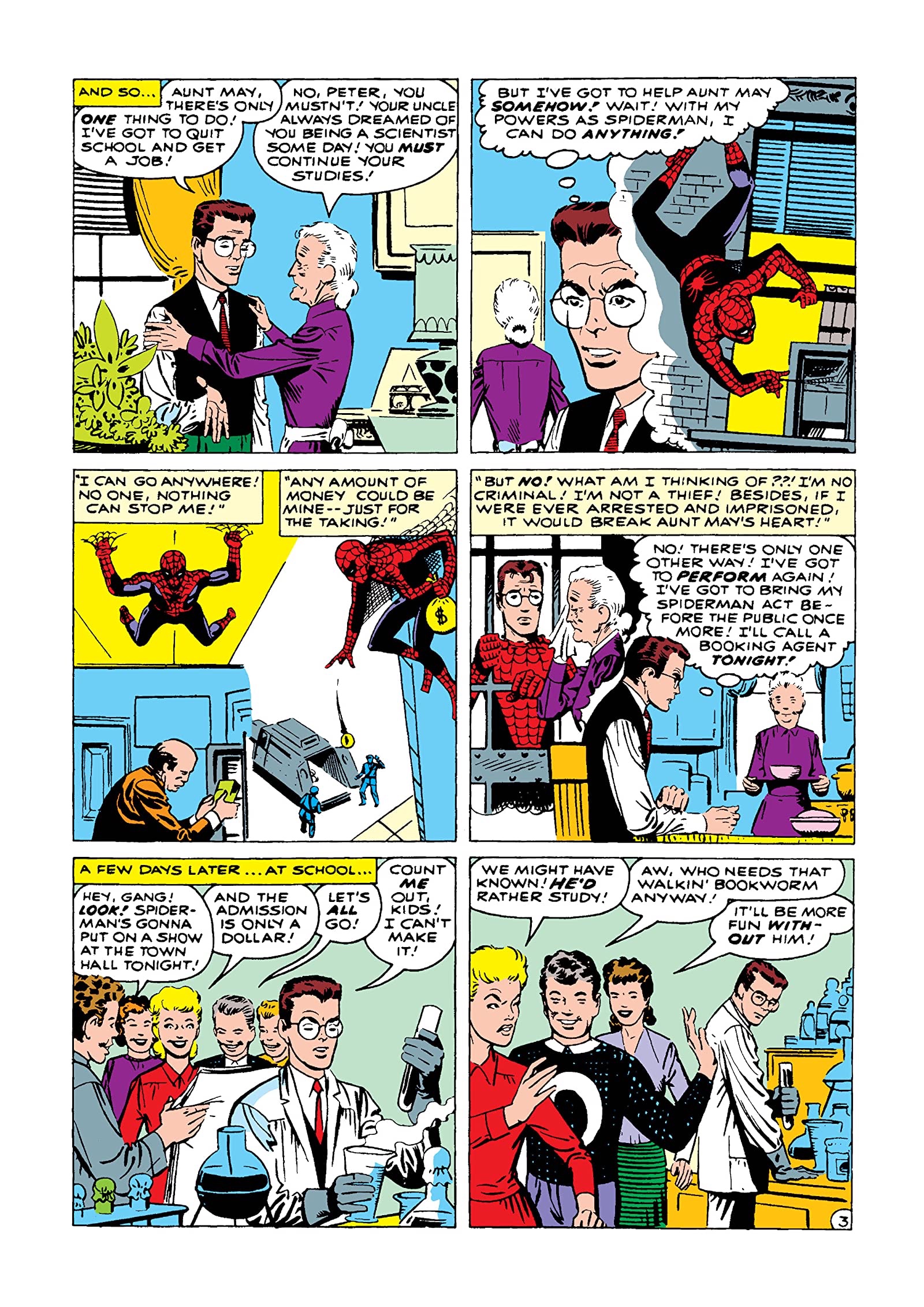
There was obviously an elements of this in the original Spider-Man series, but Yu will sometimes have you banging your head against the wall in frustration over his constant inaction and ponderings over his powers. Peter Parker’s moments when he was lamenting that the world was out to get him are almost tame in comparison to the nihilistic outlook Yu has. It’s a fairly common type in anime/manga nowadays – the moody teenager who has trouble fitting in who is suddenly the only one who can save the world (Shinji Ikari from Evangelion comes to mind), but seeing it in a Spider-Man comic is quite a trip. There’s a great opening sequence in issue 19 where Yu is stuck in a traffic jam in the sweltering heat. In his imagination, he suits up as Spider-Man and is joyously tossing all the cars out of the way with ease. But his joy is short-lived as he soon sees the destruction he has wrought and is decried as a murderer by a surviving bystander. Snapping out of his stupor, Yu sees this as a sign that he must control his anger and lust. It’s a rather extreme leap from that one page of the first issue of Amazing Spider-Man where Peter briefly considers turning to crime to support Aunt May, let alone the fact that he could have easily just imagined web swinging over the traffic. It’s on Yu if his first impulse is to start destroying cars.
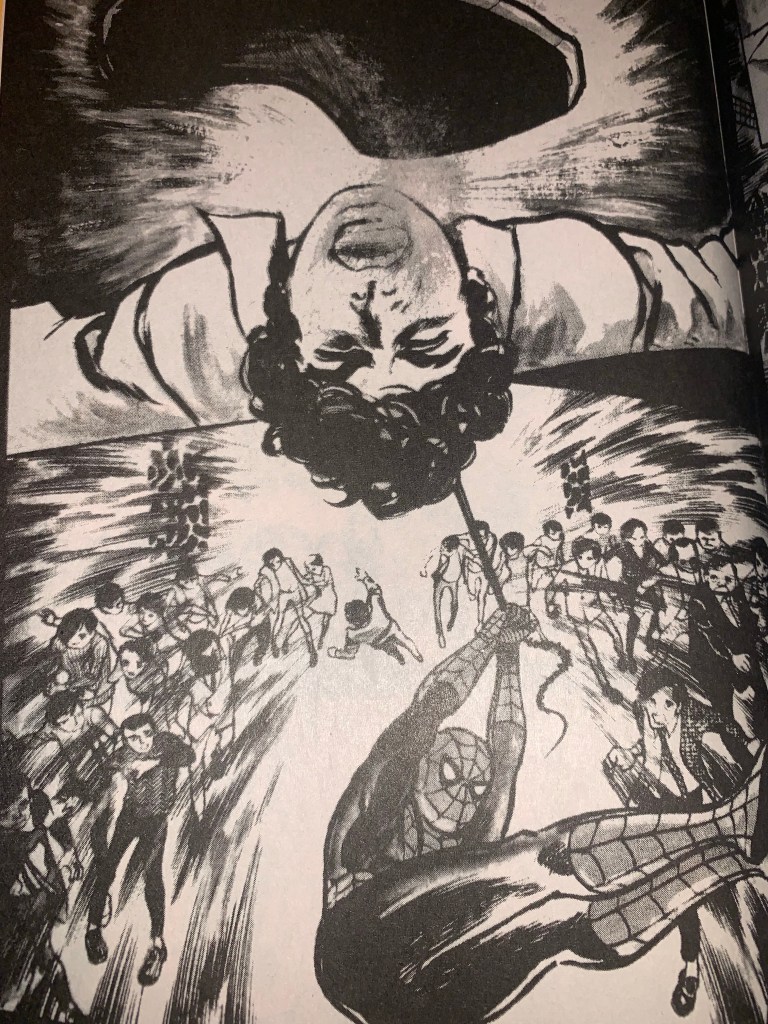
One thing that does really make the series click however is the art. Ikegami has speculated he was hired because of his more realistic art style compared to other shonen manga artists who were largely influenced by Osamu Tezuka (Astro Boy, Kimba The White Lion). The early half of the story definitely feels more cartoony if you compare it to his later style. The issues with Electro in particular have the look and feel of an old school anime from the period. But the issues with the Lizard mark a more detailed style beginning to emerge as Ikegami’s technique evolved. There is a heavier use of shading and everything has a more haunting quality. This is a Spider-Man who is more prone to the shadows than the outspoken original. The Mysterio arc is where everything really clicks, from Spider-Man despairing over a boy who needs an operation to save his eye sight as a result of his first clash with Mysterio, to his sullen brooding after rebuffing the comfort from his Aunt and Rumi, to the rather epic final battle on top of a speeding train where Ikegami demonstrates a flair for action sequences. He does seem to be most comfortable though when drawing the more gritty sequences and it’s easy to see why he gravitated toward crime manga in his later career like Crying Freeman and Heat. If you didn’t know the series was called Spider-Man, you could easily imagine the non-costumed later chapters that focus on Yu’s clashes with Yakuza and other low-lifes were from one of his later works. It’s worth mentioning the covers are tremendous also. They very much get the mission statement of making a Spider-Man manga. I’m pretty sure some of them have also been used for promotional material in mainstream Marvel stuff, but I could be wrong.
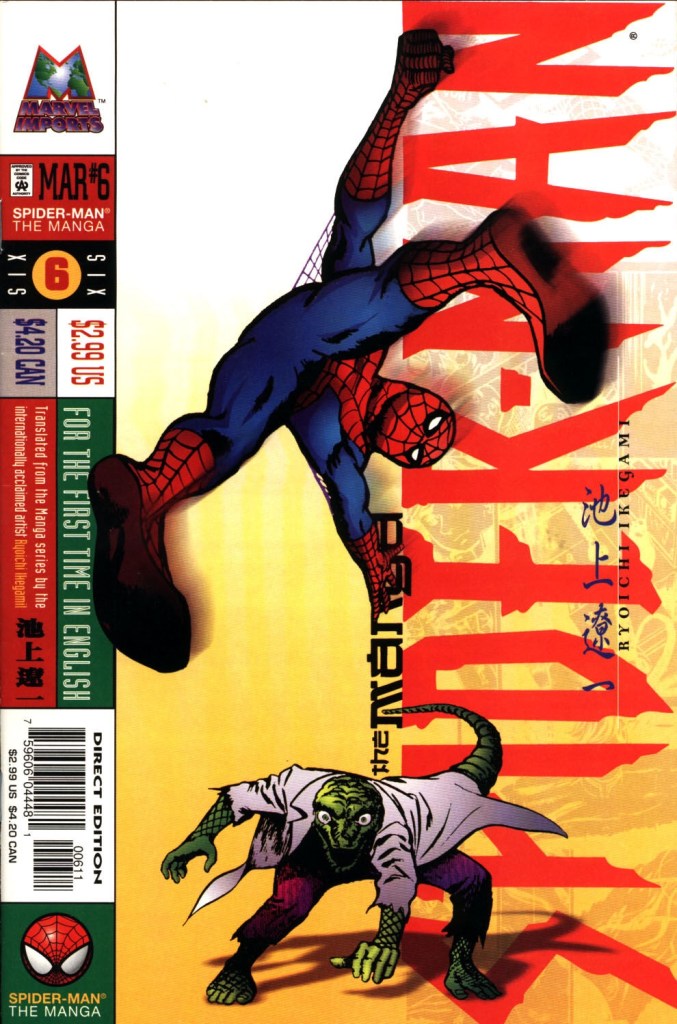
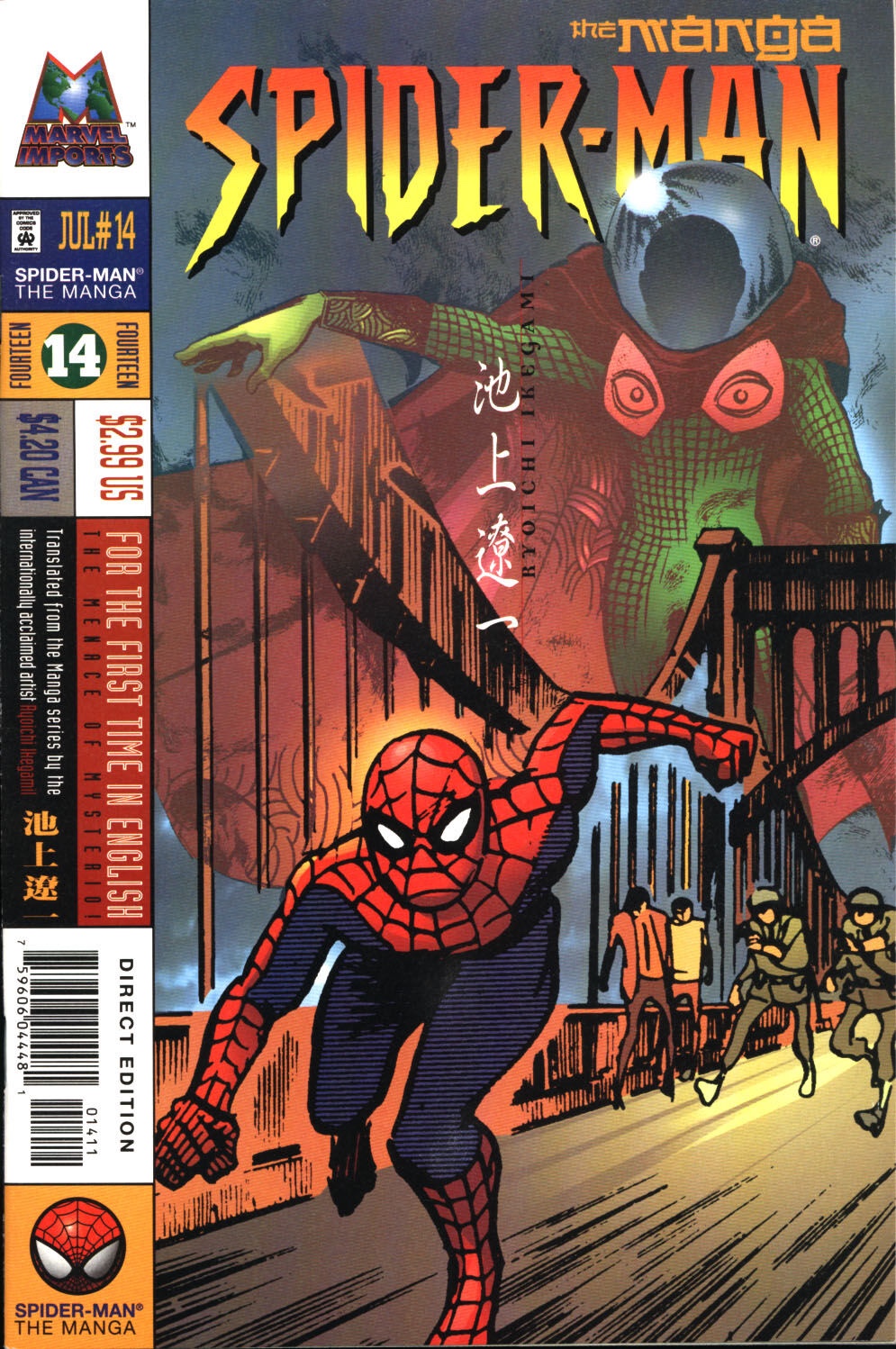
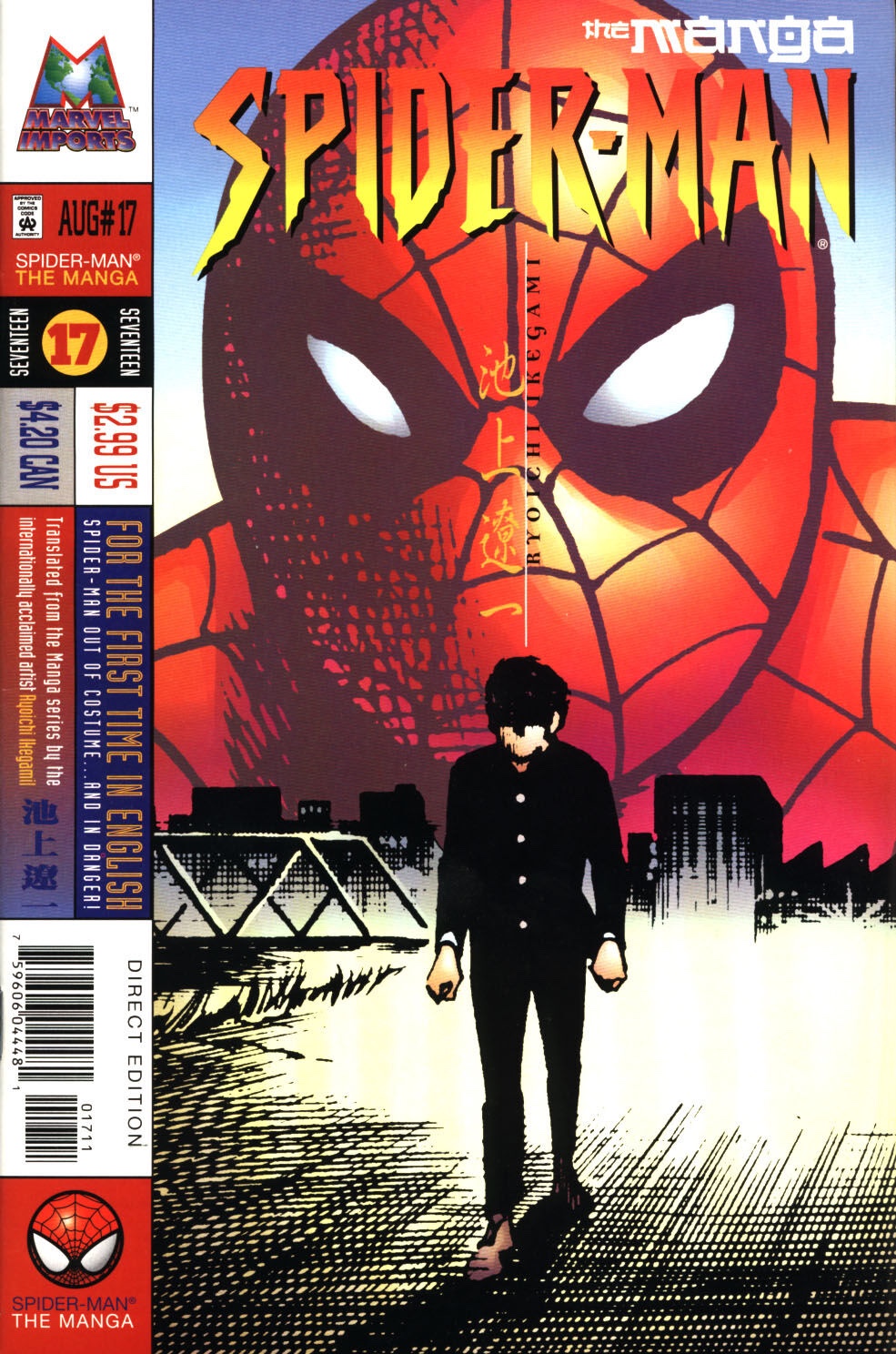
Being both a lifelong Spider-Man fan and manga enthusiast, this was a real treat to read. I’ve read Crying Freeman previously, but hadn’t really seen anymore of Ikegami’s work. It’s was fascinating to see his art style evolve overtime, though I do wonder how enthusiastic he was actually about the Spider-Man character. Yu does become further and further removed from the original as the series progresses and Ikegami seems to be having most fun when he’s fighting regular crooks out of costume (which runs the risk of falling into the trap of the live-action 70s Spider-Man TV show where all he seemed to fight were corrupt business men and martial artists). Nevertheless, I’d definitely recommend any Spider-Man fans check it out. But be forewarned, you’ll have a hard time finding it in its entirety. You’ll either need to get lucky like me by finding the back issues or just cross you fingers that Marvel might decide to reprint again someday.
 Leopard on Comics